News
@HZT Berlin
News

The Inter-University Centre for Dance Berlin (HZT) is delighted to announce that Isabel Lewis has been appointed Professor and Head of the Master Choreography program at the Ernst Busch University of Theatre Arts Berlin., effective from the winter semester 2026/27.
Isabel Lewis is a Dominican-American artist and choreographer and currently serves as Artistic Director of the Tanzquartier Wien (TQW) alongside Rio Rutzinger. Her work takes on many different formats: from lecture performances and workshops to listening sessions, installations, publications and what she has named “hosted occasions”. Since 2003, her work has been presented internationally at major institutions and biennials in the contexts of contemporary art, music, dance, and theater, including Tate Modern London, Dia Foundation New York, Performance Space New York, Gropius Bau Berlin, Sophiensaele Berlin, Roskilde Festival in Denmark, Steirischer Herbst Festival in Graz, and Kunsthalle Zürich, among others.
PRESS RELEASE
Choreographer and performer Claire Cunningham to become Einstein Professor for „Choreography, Dance and Disability Arts“ at the Inter-University Centre for Dance Berlin (HZT)
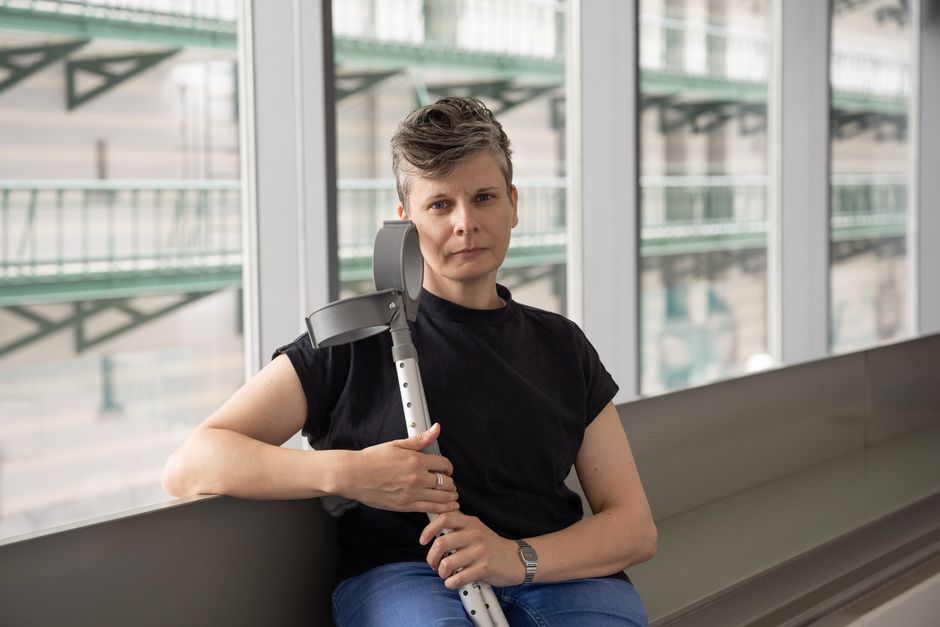
Scottish choreographer and performer Claire Cunningham is to become the Einstein Professor of „Choreography, Dance and Disability Arts“ at the Inter-University Centre for Dance (HZT) from the winter semester 2023/24. As part of her professorship, Claire Cunningham will teach and research at the HZT for an initial five years. She is the first artist to receive an Einstein Strategic Professorship. In Berlin the internationally renowned artist will contribute and further develop her focus on the „Choreography of Care“, among other research areas.
Cunningham uses and misuses her crutches as an extension of her dancing body, and the „Choreography of Care“ is an artistic response to questions arising from her critical reflection on normativity. As Cunningham explains, this is about „practices of attention and observation, informed by the lived experience of disability and by crip, queer and feminist thinking“.
Claire Cunningham‘s work at the HZT also involves the centre’s two supporting universities, the Berlin University of the Arts (UdK Berlin) and the Ernst Busch Academy of Dramatic Arts (HfS Ernst Busch), with the aim of developing inter- and transdisciplinary projects whose inclusive approach can be shared by other artistic degree programmes. As part of her Einstein Strategic Professorship, Claire Cunningham
will also collaborate with colleagues from other Berlin universities and cultural institutions.
„The opportunity to share the work, techniques and practices of disabled dance artists and choreographers with students, to place these lines in a prestigious European dance and arts institution and to support the education of disabled dancers and choreographers is a tremendously exciting task for me. I am looking forward to deepening my own research in a new constellation of colleagues and students in Berlin. In previous encounters with the HZT students, I have found their curiosity and desire to engage and learn beyond the studio to be truly encouraging, and their proactive approach to learning from a variety of experiences sets them apart from students I have met elsewhere“, the choreographer comments.
Prof. Nik Haffner, Artistic Director of the HZT, adds: „The appointment of choreographer Claire Cunningham as Einstein Strategic Professor is a milestone for Berlin, both for the dance scene and for the research and university landscape; also because Claire Cunningham always sees her art as an exploration of social
issues and as activism. The Einstein Strategic Professorship was able to emerge from the foundation built by the Berlin network ‚Making a Difference‘, which has been promoting the independent work of disabled, d/Deaf and chronically ill artists in dance since 2018; the HZT has been one of the eight founding organisations of this network“.
The directors of the HZT’s two supporting universities also see the appointment as an outstanding contribution towards situating Berlin as a centre of artistic research and international cooperation for art and science.
Prof. Dr. Norbert Palz, President of the UdK Berlin: „Claire Cunningham‘s appointment to the Einstein Strategic Professorship expands the artistic and scientific profile of the HZT to a relevant degree. Her interdisciplinary profile offers interesting institutional networking opportunities between the arts and sciences with a great radiance beyond Berlin.
Dr. Anna Luise Kiss, Rector of the HfS Ernst Busch: „A lot has happened in terms of inclusion in the arts education at Berlin‘s four artistic universities. The Einstein Strategic Professorship in ‚Choreography, Dance and Disability Arts‘ is an ideal continuation of this development. The opportunity to experience Claire Cunningham’s work and to be able to learn from and collaborate with her is a great motivation and enrichment that will have an impact far beyond the HZT and its supporting universities, elevating Berlin as a location for artistic education and research“.
With the Strategic Professorships, the Einstein Foundation Berlin supports the appointment of top researchers from abroad who are of outstanding strategic importance for Berlin as a centre of science and research. For the first time, the Foundation is awarding the Einstein Strategic Professorship to an arts university. „Claire Cunningham‘s willingness to come to Berlin is a distinction for our city, and we are pleased that we as the Einstein Foundation have been able to make a contribution“, says Chairman of the Board Prof. Martin Rennert.
Claudia Assmann
Head of the Press & Communications
Berlin University of the Arts
claudia.assmann[at]intra.udk-berlin.de
www.udk-berlin.de
BERLIN, 27.11.2023
Sehr geehrter Herr Kultursenator Joe Chialo,
Sehr geehrte Frau Staatssekretärin Sarah Wedl-Wilson,
wir schreiben Ihnen im Namen aller Studierenden des HZT Berlin und der vielen Alumni, die aktiv zur Tanzszene Berlins beitragen. Angesichts der drohenden und vorgeschlagenen Haushaltskürzungen für die Tanzförderung in den Jahren 2024 und 2025 sind wir sehr besorgt um unsere Zukunft.
Deshalb bitten wir um ein Gespräch mit Ihnen, um unsere Anliegen zu erörtern und Lösungen auszuloten. Dieses Treffen würde einen konstruktiven Dialog und ein tieferes Verständnis für die Herausforderungen ermöglichen, mit denen wir, die Studierenden, und die jungen freischaffenden Tänzer*innen und Choreograph*innen, die am HZT ihren Abschluss gemacht haben, in Berlin konfrontiert sind.
Wir wissen um die Arbeit des Runden Tisch Tanz, der 2018 etabliert wurde; über 200 Vertreter*innen aus der Tanzszene, der Kulturpolitik und der Verwaltung haben einen Entwicklungsplan für dringend gebrauchte Maßnahmen und Strukturen zur Unter-stützung des Tanzes und der Choreographie erarbeitet. Viele Absolvent*innen des HZT waren in den Arbeitsgruppen und am Symposium beteiligt. Das war ein Aufbruch, ein positives Signal für die Zukunft.
Nun müssen wir erfahren, dass der Tanz sowohl weniger Basis- und Konzept-förderung bekommen hat (ca. 15% Kürzung!) als auch die Maßnahmen des Runden Tisch Tanz um ca. 15% gekürzt werden sollen, obwohl hier ohnehin schon viel weniger angesetzt wurde als das, was ursprünglich als notwendig errechnet wurde.
Wir erhalten am HZT eine hervorragende Ausbildung. Viele Alumni sind erfolgreich in unterschiedlichen professionellen Bereichen, z.B. sind drei HZT-Alumni zur Tanzplattform Deutschland 2024 eingeladen (drei von 10 Beiträgen). Aber mit welcher Motivation sollen wir studieren, wenn unsere Perspektiven, in dieser Stadt als professionelle Künstler*innen zu arbeiten, sich weiter verengen anstatt größer zu werden?
Die Berliner Tanzszene zeichnet sich durch einen einzigartigen kollaborativen Geist aus. HZT-Absolvent*innen engagieren sich aktiv in der Kulturpolitik, wie z.B. dem Zeitgenössischen Tanz Berlin (ztb) e.V., und setzen sich in vielfältiger Weise für den Aufbau von Communities ein. Zu den Ergebnissen des vom Senat finanzierten Runden Tisch Tanz gehört eine Verlagerung der Tanzförderung weg von produkt- und projektorientierten Ansätzen hin zur direkten Förderung von Künstler*innen und ihrer künstlerischen Praxis. Dieses Modell, das sich in anderen Ländern bewährt hat, fördert ein nachhaltigeres Paradigma der Kunstförderung, das den Aufbau von Gemeinschaften unterstützt und eine wettbewerbsorientierte "Ich, ich, ich"-Haltung reduziert. Wir glauben, dass dieses Modell für Berlin sehr geeignet ist und der Stadt direkt und indirekt zugute kommt, indem es Beispiele liefert, wie wir zusammen arbeiten und leben können.
Wir freuen uns, dass Sie, Herr Kultursenator und Frau Staatssekretärin, die Bedeutung des Tanzes für die Berliner Kulturlandschaft anerkennen. Wir bitten Sie jedoch eindringlich, nicht nur die vorgeschlagenen Haushaltskürzungen zu verhindern, sondern sich auch für die notwendige Finanzierung der vorgeschlagenen Maßnahmen einzusetzen. Den Forderungen des Netzwerks TanzRaumBerlin und des ztb e.V. schließen wir uns an. Es braucht eine Tanz-Agenda 2024!
Wir danken Ihnen für Ihre Aufmerksamkeit in dieser Angelegenheit. Und wir freuen uns auf die Möglichkeit eines Treffens, um diese Anliegen ausführlicher zu besprechen.
Mit freundlichen Grüßen
alle aktuell am HZT Studierenden:
Muhamed Akiles Al-Agaili, Mateo Argerich, Saeed Asadsangabi, Leonie Baur, Paula Behrens, Ella Olivia Bender, Burcu Bilgiç, Oska Borcherding, Núria Carillo Erra, Negin Changizi, One Choi, Francesco Corsi, Michael(a) Daoud, Haidar Darwish, Juana del Mar Jimenez Infante, Carolina de Vega, Johann Eggebrecht, Eleni Faki, Melissa Ferrari, Kysy Fischer, Ángel Fontaneda, Pooyesh Frozandeh, Anton Gerzina, Lucas Godoi Sene, Alejandro González, Matteo Haitzmann, Melissa Herrada Vázquez, Natalia Higuita, Mila Nhu-Nhien Horst, Kkotshin Im, Tomoko Inoue, Johanna Magdalena Jörns, Lina Katt, Salome Kehlenbach, Donggeon Kim, Min-Suck Kim, Monia Kimara, Lisa Kohlstädt, Kamila-Monika Li, Crispin Lord, Giulia Machado-Rossi, Naledi Majola, Edgar Mauser, Safete Muchave, Colleen Ndemeh Fitzgerald, Sophia Obermeyer, Onur Özyurt, Sefa Okutan, Maria Olle Herce, Auro Orso, Noah Rees, Mahshad Rezai, Mariana Romagnani, Andrii Romanenko, Amara Thomas Saavendra, Selma Sandhagen, Holger Seidelin, Vera Shchelkina, Felipe Soto, Milena Luise Stein, Hana Stojaković, Marie Stremmel, Zsombor Szabo, Suet Wa Tam, Elvan Tekin, Diana Thielen, Hana Umeda, Gökçe Gizem Uzun, Dalia Velandia Cruz, Coco Watts, Béla Weimar-Dittmar, Naomi Wiener, Tim Winter, Konstantin Wloch, Nicole Wysokikamien, Yuchen Xie, Frida Zack
sowie die Alumni des HZT
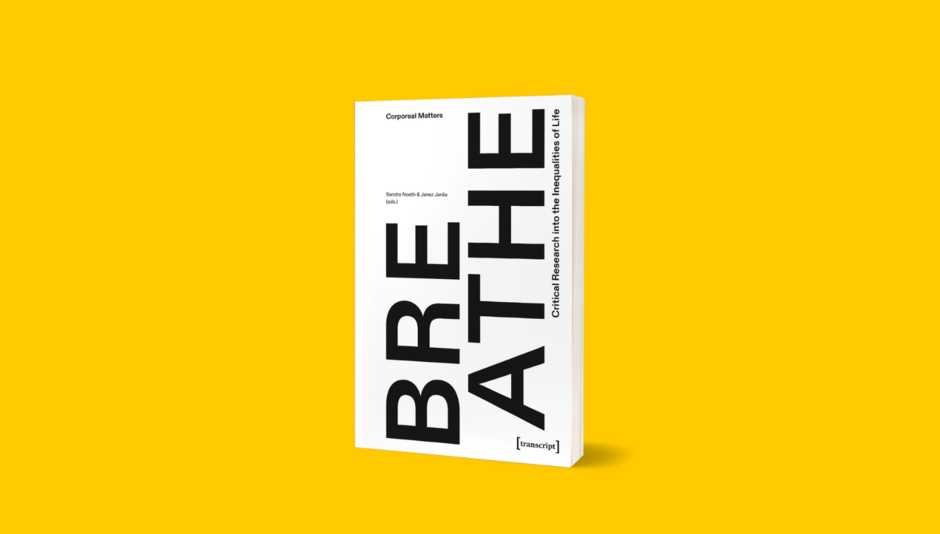
May saw the release of Breathe - Critical Research into the Inequalities of Life, the first volume of Corporeal Matters, a publication series on arts-based research, in particular practices and concepts that place the body at the core. It illuminates how the body appears simultaneously as witness, document, and agent in contemporary life, and offers insights into corporeality as the often neglected dimension that cuts through ethics, aesthetics, and politics. The series hosts edited volumes, authored publications, workbooks and other formats from multiple perspectives and fields of practice, grounded in moments of research, encounter and debate, generated in the context of the HZT-Inter-University Centre for Dance Berlin. The series is edited by Sandra Noeth, Sandra Umathum, Janez Jansa.
For Berlin's universities, very important decisions are pending in the first half of 2023 with the university contract negotiations. This concerns not least the HZT Berlin with its approximately 80 students in the field of contemporary dance, choreography and performance - it needs courageous political steps and a substantial structural strengthening to be able to lead the internationally recognized Berlin success model HZT further and into the future. With the journal Dance, Research, Future. HZT for Berlin, the HZT has published a newspaper which you can conveniently read online here and get comprehensive information about the further actions in the year.